
Department of Religious Studies
Teaching
- Religion 201: Religion in/and Everyday Language
- African 407: Language, Gender, and Sexuality in African Contexts
- African 500: Language in Society in Africa
Advising
Dr. Thompson works with students interested in conducting research in the areas of African languages, critical applied linguistics, language and gender/sexuality, cultural approaches to discourse, discourse-centered approaches to culture, and linguistic ethnography. They have supervised recent dissertations addressing the following topics:
- Discourses of discrimination among Iranian migrants in Germany
- Narrative and discursive practices in the Rwandan diaspora surrounding the 1994 genocide against the Tutsi
- Use of non-Standard Yoruba in Yoruba-language classrooms in Nigeria
- Language ideologies and multilingual practices in a Yoruba study abroad program
- Codeswitching in Indonesian popular texts
Selected Publications
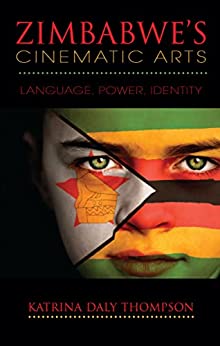
Zimbabwe’s Cinematic Arts: Language, Power, Identity
Thompson, K. Zimbabwe’S Cinematic Arts: Language, Power, Identity. Indiana University Press, 2012.
This timely book reflects on discourses of identity that pervade local talk and texts in Zimbabwe, a nation beset by political and economic crisis. Exploring questions of culture that play out in broadly accessible local and foreign film and television, Katrina Daly Thompson shows how viewers interpret these media and how they impact everyday life, language use, and thinking about community. Thompson offers a unique understanding of how media reflect and contribute to Zimbabwean culture, language, and ethnicity.
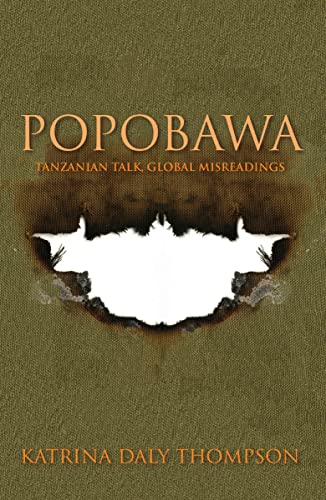
Popobawa: Tanzanian Talk, Global Misreadings
Thompson, K. Popobawa: Tanzanian Talk, Global Misreadings. Indiana University Press, 2017.
Since the 1960s, people on the islands off the coast of Tanzania have talked about being attacked by a mysterious creature called Popobawa, a shapeshifter often described as having an enormous penis. Popobawa’s recurring attacks have become a popular subject for stories, conversation, gossip, and humor that has spread far beyond East Africa. Katrina Daly Thompson shows that talk about Popobawa becomes a tool that Swahili speakers use for various creative purposes such as subverting gender segregation, advertising homosexuality, or discussing female sexuality. By situating Popobawa discourse within the social and cultural world of the Swahili Coast as well as the wider world of global popular culture, Thompson demonstrates that uses of this legend are more diverse and complex than previously thought and provides insight into how women and men communicate in a place where taboo, prohibition, and restraint remain powerful cultural forces.