Faculty Publications
Books by our Faculty
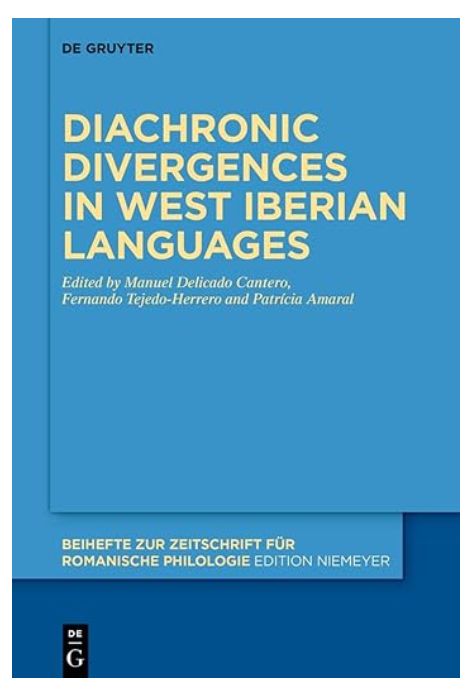
Diachronic divergences in West Iberian languages
Amaral (Co-editor), P., M. Delicado Cantero (Co-editor), and F. Tejedo-Herrero (Co-editor). Diachronic Divergences in West Iberian languages. De Gruyter, 2026.
This collected volume combines firmly-grounded theoretical perspectives with historical empirical data from different West Iberian languages (Portuguese, Galician, Asturleonese and Spanish) to deepen our understanding of linguistic divergence in typologically related languages. It is divided into four sections: nominal, verbal and clausal domains, negation and polarity. While varied in their theoretical approach, contributions all serve to examine different aspects of the overarching issue of divergence and how current theoretical frameworks help us understand what factors can account for the actuation changes in West Iberian languages. The book closes with a reflection on various findings about divergence(s), underscoring the importance of incorporating West Iberian languages in revisiting long-standing issues and broadening the empirical evidence available for ongoing research on linguistic theories of language change.
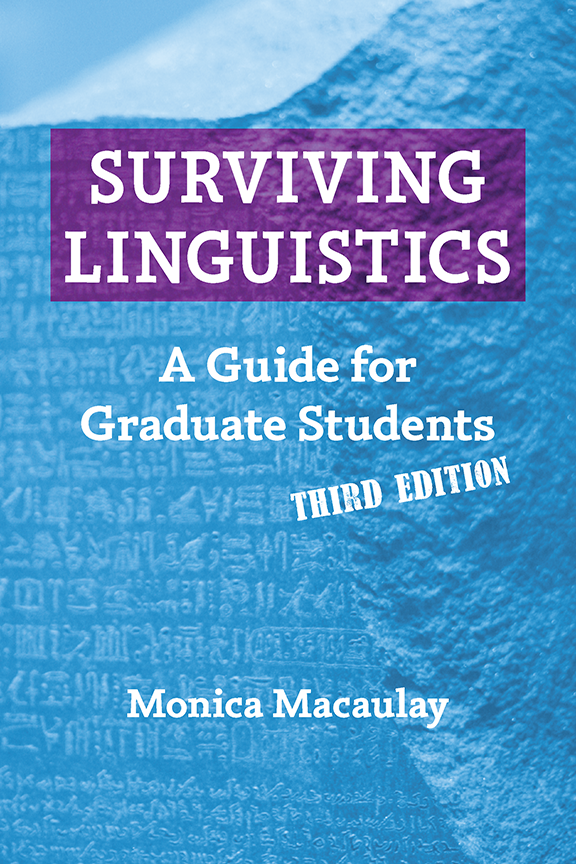
Surviving Linguistics: A Guide for Graduate Students
Macaulay, M. Surviving Linguistics: A Guide for Graduate Students. Cascadilla Press, 2025.
This popular and newly expanded guide offers linguistics students clear, practical advice on how to succeed in graduate school, earn a degree, and find a job. Along the way, the author explains how to speak at conferences, publish journal articles, write grant applications, and complete a dissertation, all while developing vital skills and making important connections within the field and in the wider world. Throughout Surviving Linguistics, Macaulay emphasizes the importance of working well with professors and fellow graduate students. Linguistics students everywhere will find valuable guidance about writing and research, publishing, seeking advice and working collaboratively, networking, and preparing for both academic and industry career paths. The book’s discussion of the structure and funding of graduate school and the process of applying for academic jobs focuses on North America.
The Phonetics and Phonology of Heritage Languages
Rao (Editor), R. The Phonetics and Phonology of Heritage Languages. Cambridge University Press, 2024.
In recent times, the study of heritage languages has rapidly grown as an area of enquiry. However, until now, less has been known about the sounds and sound systems of heritage languages. Bringing together researchers from around the globe, this volume is the first full, book-length treatment of the phonetics and phonology of heritage languages. Each chapter examines understudied bilingual dyads in a broad range of geographic and social contexts, and through a wide variety of methodological and theoretical orientations. A wide range of heritage language sound system issues are addressed: at the segmental level, production of vowels and various consonants, segmental perception, and the perception of written forms signalling phonological variation; and at the suprasegmental level, declarative and question intonation, stress, focus, and lexical tone. It is essential reading for academic researchers and students in heritage languages, bilingualism, phonetics and phonology, sociolinguistics, and language variation and change.
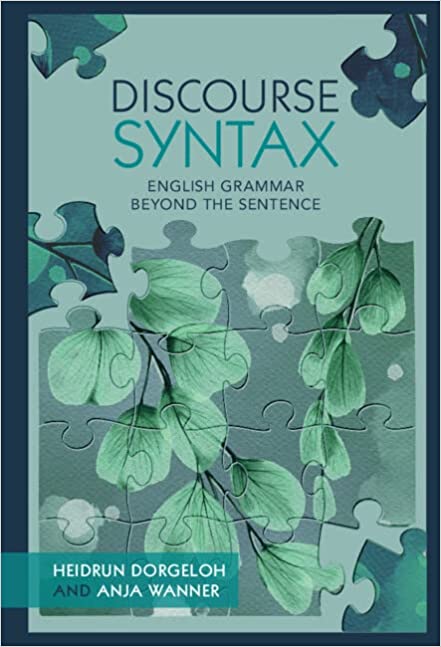
Discourse Syntax: English Grammar Beyond the Sentence
Dorgeloh, H., and A. Wanner. Discourse Syntax: English Grammar Beyond the Sentence. Cambridge University Press, 2022.
Discourse Syntax is the study of syntax that requires an understanding of the surrounding text and the overall discourse situation, including considerations of genre and modality. Using corpus data and insights from current research, this book is a comprehensive guide to this fast-developing field. It takes the reader ‘beyond the sentence’ to study grammatical phenomena, like word order variation, connectives, ellipsis, and complexity. It introduces core concepts of Discourse Syntax, integrating insights from corpus-based research and inviting the reader to reflect on research design decisions. Each chapter begins with a definition of learning outcomes, provides results from empirical articles, and enables readers to critically assess data visualization. Complete with helpful further reading recommendations as well as a range of exercises, it is geared towards intermediate to advanced students of English linguistic and it is also essential reading for anyone interested in this exciting, fast-moving discipline.
Pronunciaciones del Español
Tuten, D. N., F. Tejedo-Herrero, R. Rao, and H. R. Clarke. Pronunciaciones Del Español . Routledge, 2022.
Pronunciaciones del español es una introducción accesible a la fonética y la fonología del español que destaca la diversidad de pronunciaciones empleadas en el mundo hispanohablante. Con explicaciones claras y gráficos detallados, este libro guía al estudiante en el aprendizaje de conceptos claves de fonética articulatoria y acústica. El libro presta especial atención a la variación sociolingüística, a partir de ejemplos que cubren pronunciaciones típicas de variedades estándares y de variedades generalmente consideradas no normativas. Una abundante selección de ejercicios y actividades permite al estudiante reforzar la comprensión de conceptos claves y practicar las pronunciaciones comentadas. Un glosario bilingüe (español-inglés), archivos de audio y recursos pedagógicos se encuentran disponibles en línea en www.routledge.com/9781138657540. El libro es idóneo para estudiantes que inician estudios al nivel avanzado de español y de lingüística hispánica y que buscan familiarizarse con las pronunciaciones de diferentes variedades de español. Pronunciaciones del español is an accessible introduction to the linguistic diversity of Spanish phonetics and phonology. With clear explanations and detailed illustrations, this book guides students through key concepts in articulatory and acoustic phonetics. Particular attention is paid throughout to sociolinguistic variation, with examples covering pronunciations typical of standard varieties as well as varieties generally considered to be non-normative. A rich array of exercises and activities allow students to reinforce understanding of key concepts and practice the pronunciations as described. A bilingual glossary, accompanying audio files and teaching resources are available online at www.routledge.com/9781138657540. This book is ideal for advanced students of Spanish and Hispanic Linguistics, looking to develop familiarity with the pronunciation of different varieties of Spanish.
Universal Grammar and Iconicity
Li, Y. Universal Grammar and Iconicity. Cambridge University Press, 2022.
Within linguistics, the formal and functional approaches each offer insight into what language might be and how it operates, but so far, there have been hardly any systematic attempts to integrate them into a single theory. This book explores the relationship between universal grammar – the theory that we have an innate mechanism for generating sentences – and iconicity – the resemblance between form and meaning in language. It offers a new theory of their interactions, ‘UG-iconicity interface’ (UG-I), which shows that not only do universal grammar and iconicity coexist, but in fact collaborate in intricate and predictable ways. The theory explains various recalcitrant cross-linguistic facts surrounding the serial verb constructions, coordination, semantically and categorically obscure ‘linkers’, the multiple grammatical aspects of the external argument, and non-canonical arguments. This groundbreaking work is essential reading for researchers and postgraduate students in linguistics, as well as scholars in psychology and cognitive science.
The Routledge Handbook of Spanish Morphology
Fábregas (Co-editor), A., V. Acedo-Matellán (Co-editor), G. Armstrong (Co-editor), M. C. Cuervo (Co-editor), and I. Pujol Payet Abingdon (Co-editor). The Routledge Handbook of Spanish Morphology. Routledge, 2021.
The Routledge Handbook of Spanish Morphology presents a state-of-the-art, detailed and exhaustive overview of all aspects of Spanish morphology, paying equal attention to the empirical complexities of the morphological system and the theoretical issues that they raise. As such, this handbook is relevant both for those interested in the facts of Spanish morphology and those interested in general morphology that want to explore how the Spanish facts illuminate our understanding of human language and current theories of morphology. This volume is also unique in its extent and coverage. Written by an international team of leading experts in the field, it contains 42 chapters divided into four sections, covering all synchronic and diachronic aspects of Spanish morphology, including inflection; derivation; compounding and other processes of word formation; the interaction of morphology with other modules of grammar and the role of morphology in language acquisition, psycholinguistics and language teaching.
Sound Change
Salmons, J. Sound Change. Edinburgh University Press, 2021.
Understanding sound change through contemporary theory and historical evidence Offers broad linguistic coverage with examples from a wide range of world language families including Germanic, Romance, Mixtec, Tibetan, Hmong, Hebrew, Chinese, Kikuyu, Svan and Menominee Explores sound change from structural, historical, sociolinguistic and acquisitional perspectives Takes a data led approach with worked examples in each chapter Includes questions and suggestions for further study at the end of each chapter Drawing examples from a range of world languages, this textbook introduces the ways in which speech sounds become different over time. It explores how we produce and hear particular sounds and how overall word shapes and the pronunciation of individual words change. The roles of phonetics and phonology, morphology and syntax, traditional formal models and recent exemplar-based work in sound change are all examined. In covering both structural and societal issues, the book integrates different kinds of historical evidence and different theories into a coherent understanding of the full process of sound change.
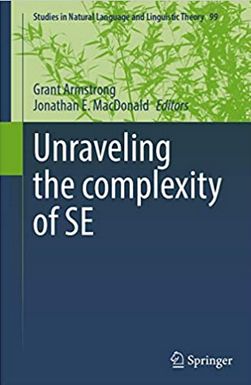
Unraveling the Complexity of SE
Armstrong (Co-editor), G., and J. E. MacDonald (Co-editor). Unraveling the Complexity of SE. Springer, 2021.
This book makes a novel contribution to our understanding of Romance SE constructions by combining both diachronic and synchronic theoretical perspectives along with a range of empirical data from different languages and dialects. The collection, divided into four sections, proposes that SE constructions may be divided into one class that is the result of grammaticalization of a reflexive pronoun up the syntactic tree, from Voice and above, and another class that has resulted from the reanalysis of reflexive and anticausative morphemes as an argument expletive or verbal morpheme generated in positions from Voice and below. The contributions, while varied in both empirical content and theoretical approach, all serve to highlight different aspects of the overarching idea that SE constructions have evolved from these two distinct grammaticalization paths. The book appeals to researchers and academics in the field and closes with a unified approach to various SE constructions that makes important use of its status as a verbal morpheme. In addition to aligning a novel string of empirical contributions under a new theoretical umbrella, a clear research direction emerges from this volume based on the morphosyntactic nature of SE itself: Is it a clitic, an agreement morpheme, or a verbal morpheme?
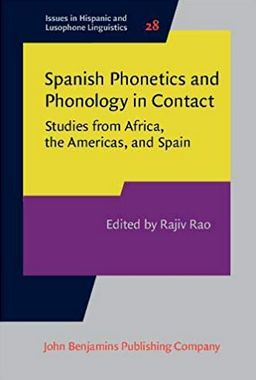
Spanish Phonetics and Phonology in Contact: Studies from Africa, the Americas, and Spain
Rao (Editor), R. Spanish Phonetics and Phonology in Contact: Studies from Africa, the Americas, and Spain. John Benjamins, 2020.
Spanish Phonetics and Phonology in Contact: Studies from Africa, the Americas, and Spain brings together scholars working on a wide range of aspects of the Spanish sound system and how their coexistence with another language in speech communities across the Hispanophone world influences their manifestation. Drawing upon seminal works in the fields of language contact in general, Spanish in contact with indigenous and regional languages, and laboratory approaches tied to the languages in question, the volumes contents employ acoustic and quantitative approaches, as well as both controlled and spontaneous data elicitation procedures, to shed light on how linguistic, historical, and social variables drive contact phenomena, and in turn, shape specific varieties of Spanish. It will pique the interest of researchers and students of fields such as contact linguistics, language variation and change, segmental and suprasegmental phonetics and phonology, and sociolinguistics.
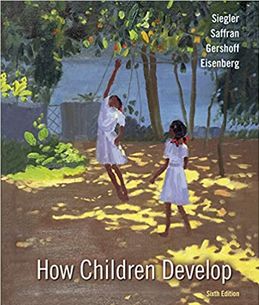
How Children Develop
Siegler, R., J. Saffran, E. T. Gershoff, N. Eisenberg, and C. Leaper. How Children Develop. Worth Publishers, 2019.
How Children Develop has established itself as the topically organized textbook teachers and researchers trust for the most up-to-date perspectives on child development. The authors, each a well-known scientist and educator―have earned that trust by introducing core concepts and impactful discoveries with an unparalleled integration of theory, cultural research, and applications, all in a style that is authoritative yet immediately understandable and relevant to students. The new edition has been rigorously updated and welcomes co-author Elizabeth Gershoff (The University of Texas at Austin), who brings a breadth of research and teaching experience to the discussions of social and emotional development. It is also more interactive than ever before, with richer integration between the book and its interactive study features in LaunchPad.
Language Contact: An International Handbook, Vol. 1
Darquennes (Co-editor), J., J. Salmons (Co-editor), and W. Vandenbussche (Co-editor). Language Contact: An International Handbook, Vol. 1. De Gruyter Mouton, 2019.
Language Contact. An International Handbook offers a comprehensive overview of current topics in research on language contact. Broadly conceived, it stands out for its international approach to language contact, complementing the theoretical state-of-the-art with examples from traditionally eclipsed areas and languages. Next to a thorough introductory overview of the ground-breaking methodological and theoretical approaches that shaped the discipline, ample attention goes to the new and innovative insights on language contact in the 21st century. Combining concise introductory contributions with in-depth treatment of the most relevant case studies in the field, the handbook speaks to both junior and established scholars.
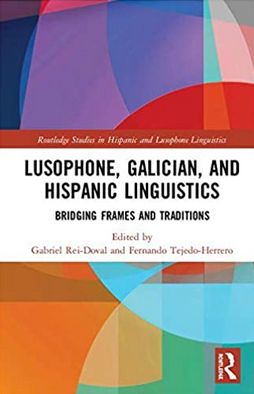
Lusophone, Galician, and Hispanic Linguistics: Bridging Frames and Traditions
Rei-Doval (Co-editor), G., and F. Tejedo-Herrero (Co-editor). Lusophone, Galician, and Hispanic Linguistics: Bridging Frames and Traditions. Routledge, 2019.
Lusophone, Galician, and Hispanic Linguistics: Bridging Frames and Traditions examines the existing historiographic, foundational and methodological issues surrounding Lusophone, Galician, and Hispanic linguistics. The volume offers a balanced collection of original research from synchronic and diachronic perspectives. It provides a first step to assessing the present and future state of Lusophone, Galician, and Hispanic linguistics and argues for an inclusive approach to the study of these three traditions which would enhance our understanding of each. Presenting the latest research in the field, this volume is a valuable resource for scholars in Lusophone, Galician, and Hispanic linguistics.
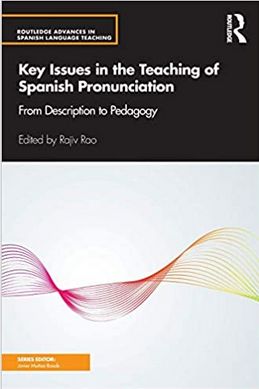
Key Issues in the Teaching of Spanish Pedagogy: From Description to Pedagogy
Rao (Editor), R. Key Issues in the Teaching of Spanish Pedagogy: From Description to Pedagogy. Routledge, 2019.
Key Issues in the Teaching of Spanish Pronunciation: From Description to Pedagogy is a resource that encourages Spanish teachers and curriculum designers to increase their incorporation of pronunciation into the classroom. Combining theory and practical guidance, it will help language practitioners integrate the teaching of Spanish pronunciation with confidence and effectiveness. The international group of scholars across its 15 chapters is made up of individuals with well-established research records and training in best pedagogical practices. Key features: A range of topics including vowels, various classes of consonants, prosody, the use of technology, the role of orthography, the importance of both perception and production, individual learner differences, and teacher training; Overviews of descriptive, empirical, and acquisition-based research associated with each aspect of the Spanish sound system; Guidance on the difficulties that teachers face when incorporating the teaching of pronunciation into the classroom; Clear explanations of concepts, accompanied by an abundance of concrete examples and references; Multiple sample activities and lesson plans tailored to different levels and backgrounds of students; A bilingual glossary of terms to help the content reach the widest audience possible. Written in a clear and accessible manner, Key Issues in the Teaching of Spanish Pronunciation is an essential resource for teachers of Spanish at all levels. It is also an excellent reference book for researchers and both undergraduate and graduate university students interested in Spanish phonetics and language acquisition.
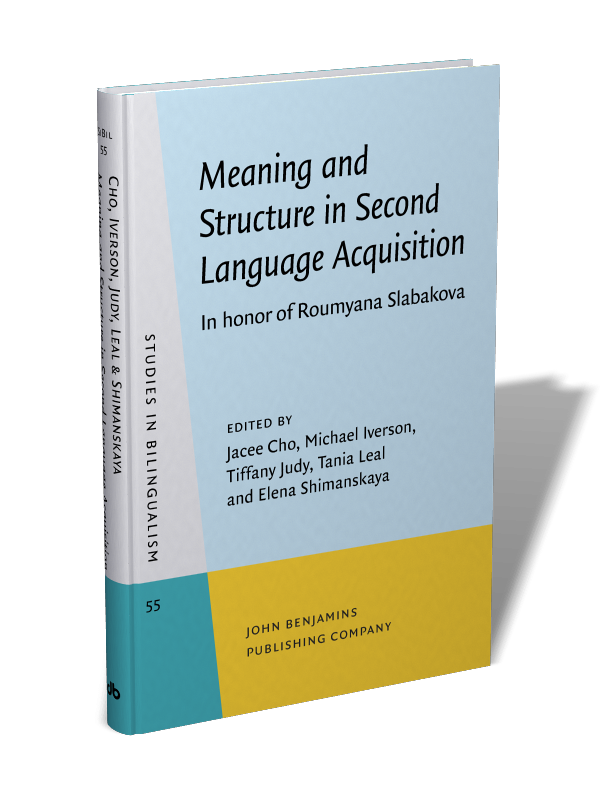
Meaning and Structure in Second Language Acquisition
Cho (Co-editor), J. Meaning and Structure in Second Language Acquisition. John Benjamins, 2018.
This volume presents a range of studies testing some of the latest models and hypotheses in the field of second/third language acquisition, such as the Bottleneck Hypothesis (Slabakova, 2008, 2016), the Scalpel Model (Slabakova, 2017), and the Interface Hypothesis (Sorace & Serratrice, 2009) to name a few. The studies explore a variety of linguistic properties (e.g., functional morphology, linguistic properties at the syntax-discourse interface) by focusing on distinct populations (L2 acquisition, L3/LN acquisition, Heritage Speakers), while also considering the links between experimental linguistic research, generative linguistics, and, in some cases, language pedagogy. Dedicated to Roumyana Slabakova, each chapter can be directly linked to her work in terms of the empirical testing of extant hypotheses, the formulation of new models and ideas, and her efforts to advance the dialogue between different disciplines and frameworks. Overall, the contributions in the volume bear evidence of Slabakova’s enduring influence in the field as a collaborator, teacher, and researcher.
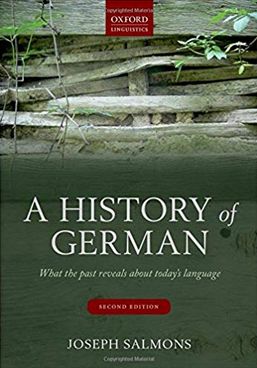
A History of German: What the Past Reveals About Today’s Language
Salmons, J. A History of German: What the Past Reveals About Today’s Language. Oxford University Press, 2018.
This book provides a detailed but accessible introduction to the development of the German language from the earliest reconstructable prehistory to the present day. Joe Salmons explores a range of topics in the history of the language, offering answers to questions such as: How did German come to have so many different dialects and close linguistic cousins like Dutch and Plattdeutsch? Why does German have ‘umlaut’ vowels and why do they play so many different roles in the grammar? Why are noun plurals so complicated? Are dialects dying out today? Does English, with all the words it loans to German, pose a threat to the language? This second edition has been extensively expanded and revised to include extended coverage of syntactic and pragmatic change throughout, expanded discussion of sociolinguistic aspects, language variation, and language contact, and more on the position of German in the Germanic family. The book is supported by a companion website and is suitable for language learners and teachers and students of linguistics, from undergraduate level upwards. The new edition also includes more detailed background information to make it more accessible for beginners.
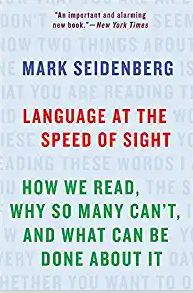
Language at the Speed of Sight
Seidenberg, M. Language at the Speed of Sight. Basic Books, 2018.
In this “important and alarming” book, see why so many American students are falling behind in their reading skills while others around the world excel (New York Times). The way we teach reading is not working, and it cannot continue. We have largely abandoned phones-based reading instruction, despite research that supports its importance for word recognition. Rather than treating Black English as a valid dialect and recognizing that speaking one dialect can impact the ability to learn to read in another, teachers simply dismiss it as “incorrect English.” And while we press children to develop large vocabularies because we think being a good reader means knowing more words, studies have found that a large vocabulary is only an indication of better pattern recognition. Understanding the science of reading is more important than ever–for us, and for our children. Seidenberg helps us do so by drawing on cutting-edge research in machine learning, linguistics, and early childhood development. Language at the Speed of Sight offers an erudite and scathing examination of this most human of activities, and concrete proposals for how our society can produce better readers.
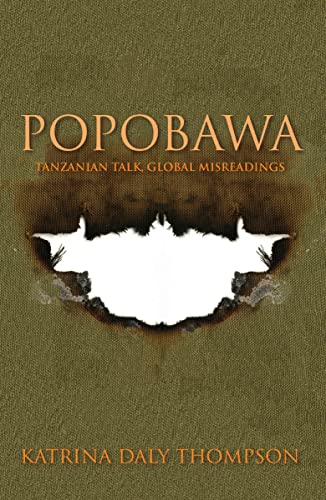
Popobawa: Tanzanian Talk, Global Misreadings
Thompson, K. Popobawa: Tanzanian Talk, Global Misreadings. Indiana University Press, 2017.
Since the 1960s, people on the islands off the coast of Tanzania have talked about being attacked by a mysterious creature called Popobawa, a shapeshifter often described as having an enormous penis. Popobawa’s recurring attacks have become a popular subject for stories, conversation, gossip, and humor that has spread far beyond East Africa. Katrina Daly Thompson shows that talk about Popobawa becomes a tool that Swahili speakers use for various creative purposes such as subverting gender segregation, advertising homosexuality, or discussing female sexuality. By situating Popobawa discourse within the social and cultural world of the Swahili Coast as well as the wider world of global popular culture, Thompson demonstrates that uses of this legend are more diverse and complex than previously thought and provides insight into how women and men communicate in a place where taboo, prohibition, and restraint remain powerful cultural forces.
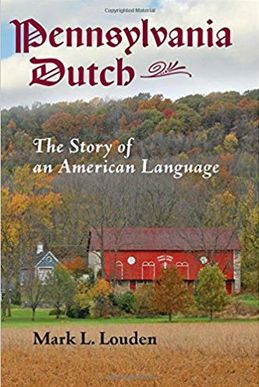
Pennsylvania Dutch: The Story of an American Language
Louden, M. Pennsylvania Dutch: The Story of an American Language. Johns Hopkins University Press, 2016.
While most world languages spoken by minority populations are in serious danger of becoming extinct, Pennsylvania Dutch is thriving. In fact, the number of Pennsylvania Dutch speakers is growing exponentially, although it is spoken by less than one-tenth of one percent of the United States population and has remained for the most part an oral vernacular without official recognition or support. A true sociolinguistic wonder, Pennsylvania Dutch has been spoken continuously since the late eighteenth century, even though it has never been “refreshed” by later waves of immigration from abroad. In this probing study, Mark L. Louden, himself a fluent speaker of Pennsylvania Dutch, provides readers with a close look at the place of the language in the life and culture of two major subgroups of speakers: the “Fancy Dutch,” whose ancestors were affiliated mainly with Lutheran and German Reformed churches, and conservative Anabaptist sectarians known as the “Plain people”―the Old Order Amish and Mennonites. Drawing on scholarly literature, three decades of fieldwork, and ample historical documents―most of which have never before been made accessible to English-speaking readers―this is the first book to offer a comprehensive look at this unlikely linguistic success story.
Spanish Language and Sociolinguistic Analysis
Sessarego (Co-editor), S., and F. Tejedo-Herrero (Co-editor). Spanish Language and Sociolinguistic Analysis. John Benjamins, 2016.
This book explores the current state of Spanish sociolinguistics and its contribution to theories of language variation and change, from both synchronic and diachronic perspectives. It offers original analyses on a variety of topics across a wide spectrum of linguistic subfields from different formal, experimental, and corpus-based standpoints. The volume is organized around six thematic sections: (i) Cutting-edge Methodologies in Sociolinguistics; (ii) Bilingualism; (iii) Language Acquisition; (iv) Phonological Variation; (v) Morpho-Syntactic Variation; and (vi) Lexical Variation. As a whole, this collection reflects an array of approaches and analyses that show how in its variation across speakers, speech communities, linguistic contexts, communicative situations, dialects, and time, the Spanish language provides an immense wealth of data to challenge accepted linguistic views and shape new theoretical proposals in the field of language variation and change. Spanish Language and Sociolinguistic Analysis represents a significant contribution to the growing field of Spanish sociolinguistics.
The Oxford Handbook of Historical Phonology
Salmons (Co-editor), J., and P. Honeybone (Co-editor). The Oxford Handbook of Historical Phonology. Oxford University Press, 2016.
This book presents a comprehensive and critical overview of historical phonology as it stands today. Scholars from around the world consider and advance research in every aspect of the field. In doing so they demonstrate the continuing vitality and some continuing themes of one of the oldest sub-disciplines of linguistics. The book is divided into six parts. The first considers key current research questions, the early history of the field, and the structuralist context for work on segmental change. The second examines evidence and methods, including phonological reconstruction, typology, and computational and quantitative approaches. Part III looks at types of phonological change, including stress, tone, and morphophonological change. Part IV explores a series of controversial aspects within the field, including the effects of first language acquisition, the status of lexical diffusion and exceptionless change, and the role of individuals in innovation. Part V considers theoretical perspectives on phonological change, including those of evolutionary phonology and generative historical phonology. The final part examines sociolinguistic and exogenous factors in phonological change, including the study of change in real time, the role of second language acquisition, and loanword adaptation. The authors, who represent leading proponents of every theoretical perspective, consider phonological change over a wide range of the world’s language families. The handbook is, in sum, a valuable resource for phonologists and historical linguists and a stimulating guide for their students.
The Segment in Phonetics and Phonology
Raimy (Co-editor), E., and C. E. Cairns (Co-editor). The Segment in Phonetics and Phonology. Wiley-Blackwell, 2015.
The Segment in Phonetics and Phonology unravels exactly what the segment is and on what levels it exists, approaching the study of the segment with theoretical, empirical, and methodological heterogeneity as its guiding principle. A deliberately eclectic approach to the study of the segment that investigates exactly what the segment is and on what level it exists Includes new research data from a diverse range of fields such as experimental psycholinguistics, language acquisition, and mathematical theories of communication Represents the major theoretical models of phonology, including Articulatory Phonology, Optimality Theory, Laboratory Phonology and Generative Phonology Examines both well-studied languages like English, Chinese, and Japanese and under-studied languages such as Southern Sierra Miwok, Päri, and American Sign Language
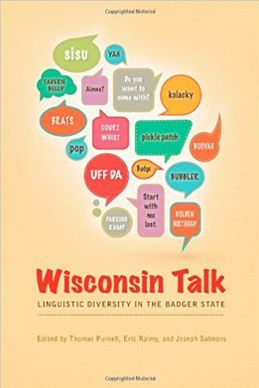
Wisconsin Talk: Linguistic Diversity in the Badger State
Salmons (Co-editor), J., E. Raimy (Co-editor), and T. Purnell (Co-editor). Wisconsin Talk: Linguistic Diversity in the Badger State. University of Wisconsin Press, 2013.
Wisconsin is one of the most linguistically rich places in North America. It has the greatest diversity of American Indian languages east of the Mississippi, including Ojibwe and Menominee from the Algonquian language family, Ho-Chunk from the Siouan family, and Oneida from the Iroquoian family. French place names dot the state’s map. German, Norwegian, and Polish—the languages of immigrants in the nineteenth and early twentieth centuries—are still spoken by tens of thousands of people, and the influx of new immigrants speaking Spanish, Hmong, and Somali continues to enrich the state’s cultural landscape. These languages and others (Walloon, Cornish, Finnish, Czech, and more) have shaped the kinds of English spoken around the state. Within Wisconsin’s borders are found three different major dialects of American English, and despite the influences of mass media and popular culture, they are not merging—they are dramatically diverging. An engaging survey for both general readers and language scholars, Wisconsin Talk brings together perspectives from linguistics, history, cultural studies, and geography to illuminate why language matters in our everyday lives. The authors highlight such topics as: • words distinctive to the state • how recent and earlier immigrants have negotiated cultural and linguistic challenges • the diversity of bilingual speakers that enriches our communities • how maps can convey the stories of language • the relation of Wisconsin’s Indian languages to language loss worldwide.
Zimbabwe’s Cinematic Arts: Language, Power, Identity
Thompson, K. Zimbabwe’S Cinematic Arts: Language, Power, Identity. Indiana University Press, 2012.
This timely book reflects on discourses of identity that pervade local talk and texts in Zimbabwe, a nation beset by political and economic crisis. Exploring questions of culture that play out in broadly accessible local and foreign film and television, Katrina Daly Thompson shows how viewers interpret these media and how they impact everyday life, language use, and thinking about community. Thompson offers a unique understanding of how media reflect and contribute to Zimbabwean culture, language, and ethnicity.
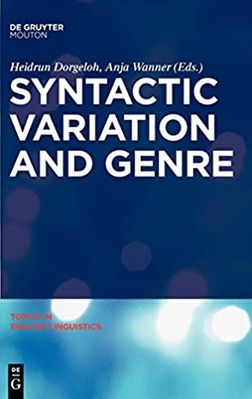
Syntactic Variation and Genre
Dorgeloh (Co-editor), H., and A. Wanner (Co-editor). Syntactic Variation and Genre. Mouton de Gruyter, 2010.
This volume explores the interplay of syntactic variation and genre. How do genres emerge and what is the role of syntax in constituting them? Why do certain constructions appear in certain types of text? The book takes the concept of genre as a reference-point for the description and analysis of morpho-syntactic variation and change. It includes both overviews of theoretical approaches to the concept of genre and text type in linguistics and studies of specific syntactic phenomena in English, German, and selected Romance languages. Contributions to the volume make use of insights from attempts for text classification and rhetorical views on genre and reach from quantitative, corpus-based methodology to qualitative, text-based analyses. The types of texts investigated cover spoken, highly interactive, and written forms of communication, including selected genres of computer-mediated communication. Corpus data come from both synchronic and diachronic linguistic corpora, such as LOB, Brown, FLOB, Frown, ARCHER, and ICE-Jamaica. This spectrum both in approaches and data is meant to provide a theoretical foundation as well as a realistic view of the inherent complexity of form-function relationships in syntax. At the same time, genre is treated as a category relevant beyond discourse studies, consisting of forms and conventions at all levels of linguistic analysis, including syntax. The book is therefore of interest to linguists and graduate students in the area of syntax, discourse analysis, and pragmatics, as well as to sociolinguists and corpus linguists working on register variation.
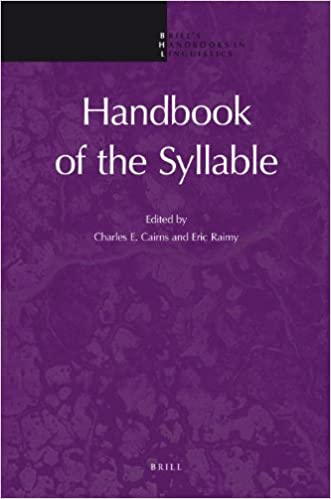
Handbook of the Syllable
Cairns (Co-editor), C. E., and E. Raimy (Co-editor). Handbook of the Syllable. Brill, 2010.
The Handbook of the Syllable presents a broad range of empirical studies, offering a comprehensive survey of the syllable in phonology, phonetics, and psycholinguistics. It is a seminal reference book for researchers exploring any empirical area where the notion of “the syllable” is invoked.
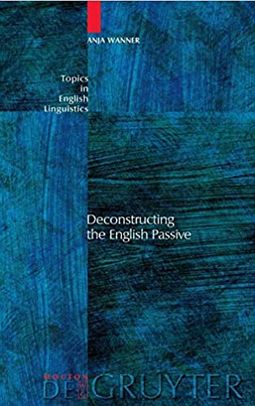
Deconstructing the English Passive
Wanner, A. Deconstructing the English Passive. Mouton de Gruyter, 2009.
Deconstructing the English Passive presents an analysis of the form and function of the passive construction in English. The book examines the structural ingredients of the passive and emphasizes the notion of an implicit argument, which sets the passive apart from other constructions with non-agentive subjects. The theoretical analysis is supported with corpus data, including a case study of the passive in academic writing.
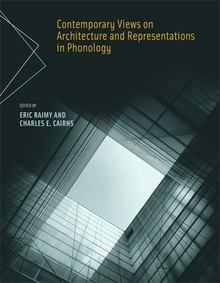
Contemporary Views on Architecture and Representations in Phonology
Raimy (Co-editor), E., and C. E. Cairns (Co-editor). Contemporary Views on Architecture and Representations in Phonology. MIT Press, 2009.
Leading phonologists discuss contemporary work on the topics of metrical theory, feature theory, syllable theory, and the relation among grammatical modules. The essays in this volume address foundational questions in phonology that cut across different schools of thought within the discipline. The theme of modularity runs through them all, however, and these essays demonstrate the benefits of the modular approach to phonology, either investigating interactions among distinct modules or developing specific aspects of representation within a particular module. Although the contributors take divergent views on a range of issues, they agree on the importance of representations and questions of modularity in phonology. Their essays address the status of phonological features, syllable theory, metrical structure, the architecture of the phonological component, and interaction among components of phonology. In the early 1990s the rise of Optimality Theory–which suggested that pure computation would solve the problems of representations and modularity–eclipsed the centrality of these issues for phonology. This book is unique in offering a coherent view of phonology that is not Optimality Theory based. The essays in this book, all by distinguished phonologists, demonstrate that computation and representation are inherently linked; they do not deny Optimality Theory, but attempt to move the field of phonology beyond it.
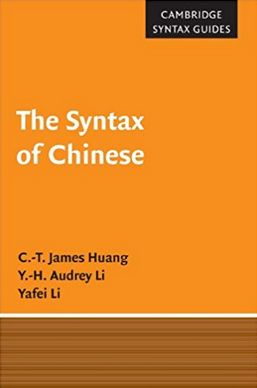
The Syntax of Chinese
Li, Y., C.-T. J. Huang, and Y.-H. A. Li. The Syntax of Chinese. Cambridge University Press, 2009.
The past quarter of a century has seen a surge in Chinese syntactic research that has produced a sizeable literature on the analysis of almost every construction in Mandarin Chinese. This guide to Chinese syntax analyses the majority of constructions in Chinese that have featured in theoretical linguistics in the past 25 years, using the authors’ own analyses as well as existing or potential alternative treatments. A broad variety of topics are covered, including categories, argument structure, passives and anaphora. The discussion of each topic sums up the key research results and provides new points of departure for further research. This book will be invaluable both to students wanting to know more about the grammar of Chinese, and graduate students and theoretical linguists interested in the universal principles that underlie human languages.
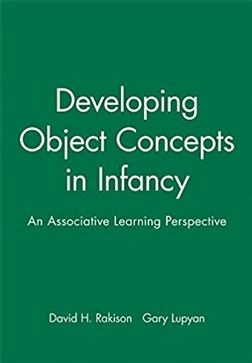
Developing Object Concepts in Infancy: An Associative Learning Perspective
Rakison, D. H., and G. Lupyan. Developing Object Concepts in Infancy: An Associative Learning Perspective. Wiley-Blackwell, 2008.
We present a domain-general framework called constrained attentional associative learning to provide a developmental account for how and when infants form concepts for animates and inanimates that encapsulate not only their surface appearance but also their movement characteristics. Six simulations with the same general-purpose architecture implement the features of the theory to model infant behavior in learning about objects’ motion trajectory, their causal role, their onset of motion, and the initial mapping between a label and a moving object. Behavioral experiments with infants tested novel hypotheses generated by the model, showing that verbal labels initially may be associated with specific features rather than overall shape. Implications of the framework and model are discussed in relation to the mechanisms of early learning, the development of the animate–inanimate distinction, and the nature of development in the first years of life.

X0: A Theory of the Morphology-Syntax Interface
Li, Y. X0: A Theory of the Morphology-Syntax Interface. MIT Press, 2004.
This important monograph offers a resolution to the debate in theoretical linguistics over the role of syntactic head movement in word formation. It does so by synthesizing the syntactic and lexicalist approaches on the basis of the empirical data that support each side. In trying to determine how a morphologically complex word is formed in Universal Grammar, generative linguists have argued either that a substantial amount of morphological phenomena result from head movement in overt syntax (the widely adopted syntactic approach) or that morphological/lexical means are both necessary and sufficient for a theory of word formation (the Lexicalist Hypothesis). Li examines both the linguistic facts that are brought to light for the first time and the existing data in the literature and shows that each side has an empirical foundation that cannot be negated by the other. Since neither approach is adequate to explain all the facts of word formation, he argues, the way to achieve a unified account lies in synthesizing the empirically advantageous portions of both approaches into one simple and coherent theory.Li begins by demonstrating how a theory that combines the essence of the syntactic and lexicalist approaches can account more accurately for the various morphological constructions analyzed in the literature by means of syntactic verb incorporation. He then examines causativization on the adjectival root, noun incorporation in polysynthetic languages, and the possibility that the word formation part of the Lexicalist Hypothesis―which is crucial to his theory―can be derived as a theorem from a version of the X-bar theory. He concludes by discussing methodological issues in current linguistic research.
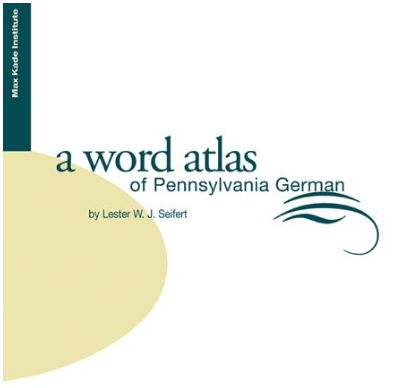
A Word Atlas of Pennsylvania German
Seifert, L. W. J., M. Louden (Co-editor), J. Salmons (Co-editor), and H. Martin (Co-editor). A Word Atlas of Pennsylvania German. Max Kade Institute, 2001.
This is the most extensive reference work documenting linguistic variations in Pennsylvania German (also known as Pennsylvania Dutch), the dialect now spoken primarily by Old Order Amish and Old Order Mennonite communities in the United States. This Word Atlas displays more than 170 maps showing regional variants for a word or grammatical form throughout the former German-speaking regions of southeastern Pennsylvania, as well as helpful maps of Pennsylvanian geographical features and political boundaries. One of the pioneers in linguistic research on this dialect, Lester W. J. Seifert of the University of Wisconsin–Madison and his colleague Carroll Reed of the University of Washington interviewed almost 100 speakers in these regions during the 1940s, using an extensive questionnaire. This research, graphically represented in the Word Atlas, is an invaluable record of a historically and culturally important language that is rapidly dying out. The volume also reprints four of Seifert’s classic essays on the dialect geography of Pennsylvania German, as well as biographies of the linguistic consultants, an original essay on the development of Pennsylvania German dialectology and linguistics by Mark Louden, and a new biography of Seifert by Howard Martin and Suzanne Treichel.
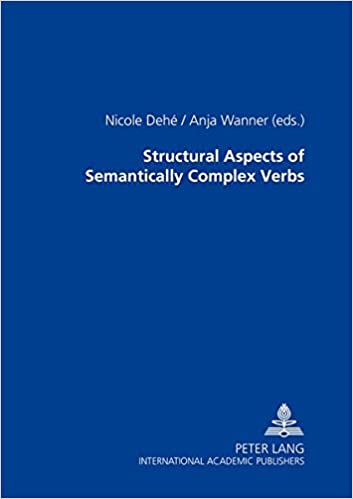
Structural Aspects of Semantically Complex Verbs
Dehé (Co-editor), N., and A. Wanner (Co-editor). Structural Aspects of Semantically Complex Verbs. Peter Lang GmbH, 2001.
It is a point of debate to what extent and according to which principles the syntactic behavior of verbs can be derived from their semantic representations and how it can be affected by lexical or syntactic operations. This collection of articles brings together insights from the research on verbs whose semantic structure has been made more complex by the incorporation of a particle, a prefix, a verbal or a nominal element. A list of the constructions and languages that are discussed includes particle and prefix verbs in English and German, resultative constructions in English, Danish and Spanish, psych verbs in English and German, and compound verbs in Greek, Chinese, and Persian.
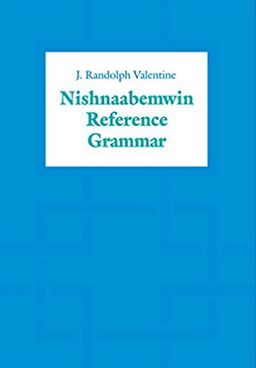
Nishnaabemwin Reference Grammar
Valentine, R. Nishnaabemwin Reference Grammar. University of Toronto Press, 2001.
This descriptive reference grammar of Nishnaabemwin (Odawa and Eastern Ojibwe), a major dialect group within contemporary Ojibwe spoken in the vicinity of Lake Huron in Southern Ontario, represents the most comprehensive works on an Algonquin language published to date. It includes extensive descriptive treatment of phonology, orthography, inflectional morphology, derivational morphology, and major structural and functional syntactic categories. Points of grammar are copiously illustrated with example sentences indexed with thorough grammatical annotations. An extensive glossary of standard Algonquian linguistic terms is also provided. Written for both the beginning linguist as well as the scholar of Algonquian languages, this grammar provides simple explanations of linguistic terms as well as a thorough and comprehensive study of the language. Nishnaabemwin Reference Grammar represents a major contribution to linguistics in general and to Algonquian language study in particular.
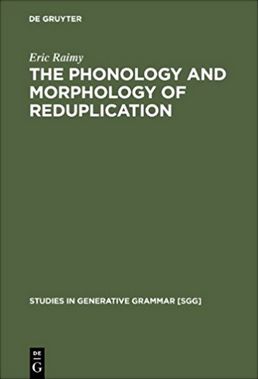
The Phonology and Morphology of Reduplication
Raimy, E. The Phonology and Morphology of Reduplication. Walter de Gruyter, 2000.
This book proposes a new representational analysis of reduplication based on making explicit precedence relations in phonological representations.The main claim is that reduplication results from loops in the precedence structure of phonological representations. Modular rule based analyses of overapplication and underapplication effects including backcopying are presented to argue against the McCarthy and Prince (1995) claim that a derivational model of reduplication is conceptually and empirically inadequate. Other sections of the book discuss the implications of explicit precedence information for the concatenation of morphemes, the analysis of infixation, and templates in reduplication. Analyses of relevant phenomena from Indonesian, Tohono Oodham, Chaha, Chumash and Nancowry among other languages are provided.

Verbklassifizierung und aspektuelle Alternationen im Englischen
Wanner, A. Verbklassifizierung Und Aspektuelle Alternationen Im Englischen. Max Niemeyer Verlag, 1999.
The syntactic behaviour of verbs is largely determined by their meaning. A problem for this theory is that verbs behave in a syntactically variable way, for example all intransitive verbs also occur with an object (‘nod one’s approval’, ‘smile a happy smile’, etc.). This study of English takes its bearings from generative grammar and classifies verbs in lexical and syntactic terms. On this basis, theories of argument linking are then discussed. The study elaborates a model centering on Optimality Theory and implemented for the analysis of argument alternations (resultative construction, causative alternation, passive) and verb classes (psych verbs, verbs of movement).
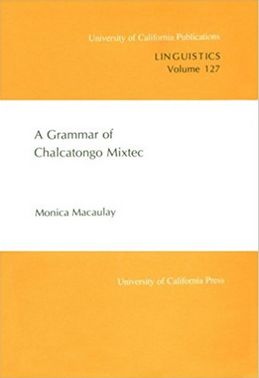
A Grammar of Chalcatongo Mixtec
Macaulay, M. A Grammar of Chalcatongo Mixtec. University of California Press, 1996.
This is the first comprehensive grammar of any variety of Mixtec written for linguists. It provides theoretically informed (generative) description and analysis of the phonetics, phonology, morphology, syntax, and lexical semantics of this dialect, situated in the broader context of Mixtecan and Otomanguean languages. Texts and a lexicon (Mixtec-English/English-Mixtec, 1,500 words) are included as well.